
“My period is just irregular” is one of the most dismissed sentences in Nigerian women’s health. It gets waved off by relatives, joked about by friends, and rarely investigated by the women living with it. But for millions of women, irregular periods aren’t a personality trait, they’re a symptom of an underlying hormonal condition called Polycystic Ovary Syndrome (PCOS).
PCOS affects an estimated 1 in 10 women of reproductive age worldwide, and many researchers believe the real number in Nigeria is higher and significantly underdiagnosed. It is one of the leading causes of infertility, a major driver of long-term metabolic disease, and one of the most poorly understood conditions among Nigerian women, largely because its symptoms get blamed on everything except the actual cause.
This article breaks down what PCOS actually is, why it’s so often missed, and what you can do if you recognise yourself in it.
What Is PCOS?
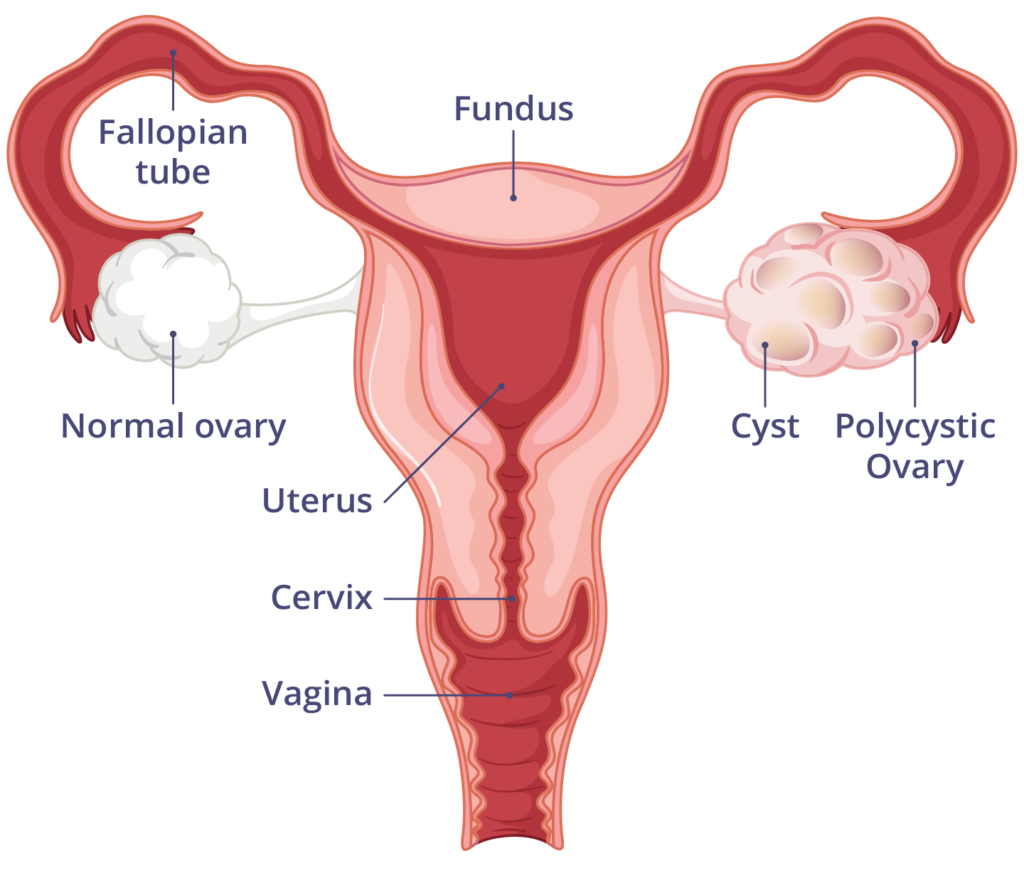
Polycystic Ovary Syndrome is a hormonal disorder in which the ovaries produce higher-than-normal levels of androgens (male hormones that women also produce in small amounts). This hormonal imbalance disrupts ovulation, the monthly release of an egg, and causes a cluster of symptoms that can affect periods, skin, hair, weight, and fertility.
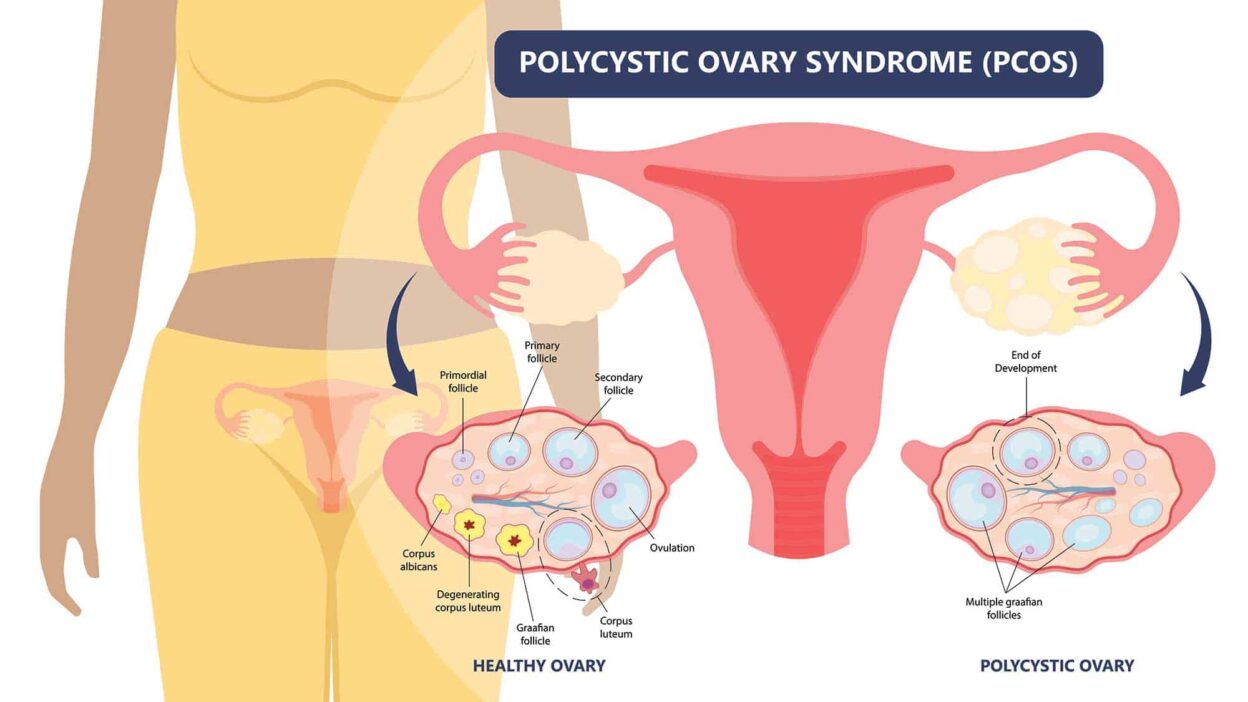
Despite the name, PCOS is not actually about having “cysts” in the traditional sense. On ultrasound, the ovaries often show multiple small, immature follicles that failed to develop and release an egg properly, not true cysts, but the name has stuck since the condition was first described.
PCOS is not one single problem; it’s a syndrome, meaning it shows up differently from woman to woman. Some women have severe symptoms, others have very mild ones, and some don’t realise anything is wrong until they struggle to conceive.
Why PCOS Gets Missed in Nigeria
- Irregular periods are normalised. Many Nigerian women grow up believing irregular cycles are simply “how their body is,” rather than a sign worth investigating.
- Symptoms are attributed to other causes. Weight gain gets blamed on diet alone, acne on skincare, and excess hair growth on genetics, without anyone connecting the dots.
- Limited awareness among the general public. PCOS is rarely discussed openly, even though it is one of the most common hormonal conditions in women of reproductive age.
- It often only gets investigated during fertility struggles. Many women are first diagnosed with PCOS only after months or years of trying unsuccessfully to conceive, by which point the condition may have been present, and untreated, for a decade or more.
Common Symptoms
PCOS symptoms vary, but the following are the most recognised signs, especially when several appear together:
| Symptom | What It Looks Like |
| Irregular or absent periods | Cycles longer than 35 days, unpredictable timing, or missed periods entirely |
| Excess hair growth (hirsutism) | Coarse hair on the face, chin, chest, or lower abdomen |
| Acne | Persistent, often along the jawline and chin, that doesn’t respond to typical skincare |
| Hair thinning or scalp hair loss | A male-pattern-like thinning at the crown |
| Weight gain, especially around the abdomen | Difficulty losing weight despite diet and exercise efforts |
| Darkened skin patches | Particularly around the neck, armpits, or groin (acanthosis nigricans), a sign linked to insulin resistance |
| Difficulty conceiving | Due to irregular or absent ovulation |
| Mood changes | Anxiety and low mood are more common in women with PCOS, partly linked to the hormonal imbalance itself |
Not every woman with PCOS has every symptom, and severity differs widely. The common thread is a pattern of irregular cycles combined with one or more signs of excess androgen activity.
What’s Actually Happening in the Body
At the centre of PCOS for most women is insulin resistance, a condition where the body’s cells don’t respond normally to insulin, forcing the pancreas to produce more of it. Excess insulin, in turn, pushes the ovaries to produce more androgens, which disrupts ovulation and drives many of the visible symptoms like acne, excess hair growth, and weight gain around the midsection.
This is why PCOS is considered as much a metabolic condition as a reproductive one. It’s closely linked to a higher lifetime risk of:
- Type 2 diabetes
- High blood pressure
- Abnormal cholesterol levels
- Cardiovascular disease
- Endometrial (uterine lining) changes from infrequent periods
This metabolic link is one of the most important things Nigerian women need to understand about PCOS: it is not only about periods and fertility, it’s a whole-body condition that raises long-term health risks if left unmanaged.
PCOS and Fertility
PCOS is one of the most common causes of infertility, but it is important to be clear: PCOS does not mean you cannot get pregnant. It means ovulation is irregular or absent, which makes conceiving naturally more unpredictable and, for some women, more difficult without support.
With the right diagnosis and management, many women with PCOS go on to conceive, whether through lifestyle changes that restore more regular ovulation, medication that induces ovulation, or fertility treatment when needed. The earlier PCOS is identified, the more options are available.
PCOS vs Fibroids: Not the Same Condition
Pretty Healthcare previously covered Fibroids in Nigerian Women, and the two conditions are sometimes confused because both can affect periods and fertility. Here’s the difference:
| PCOS | Fibroids | |
| What it is | A hormonal disorder affecting ovulation | Non-cancerous growths in the muscle wall of the uterus |
| Typical period pattern | Irregular, infrequent, or absent periods | Often heavy, prolonged, or painful periods with regular timing |
| Main driver | Hormonal imbalance, insulin resistance | Hormonal (oestrogen/progesterone) growth stimulation |
| Effect on fertility | Disrupts ovulation | Can physically block implantation or distort the uterine cavity |
| Diagnosis | Blood hormone tests, pelvic ultrasound, symptom pattern | Pelvic ultrasound, physical exam |
It’s entirely possible to have both conditions, or neither, which is exactly why a proper evaluation matters rather than guessing based on symptoms alone.
Diagnosis: How PCOS Is Actually Confirmed
There is no single test for PCOS. Diagnosis is based on a combination of the following, typically requiring at least two of three recognised criteria:
- Irregular or absent ovulation, reflected in irregular or infrequent periods
- Clinical or blood-test evidence of excess androgens, such as hirsutism, acne, or elevated androgen hormone levels
- Pelvic ultrasound findings showing multiple small follicles on the ovaries
A full work-up typically includes:
- Hormone panel: testosterone, LH, FSH, prolactin, and thyroid function, since thyroid disorders can mimic PCOS symptoms
- Pelvic ultrasound: to assess the ovaries and rule out other causes such as fibroids
- Fasting blood glucose and insulin, or an HbA1c test: to check for insulin resistance, given how closely PCOS and metabolic health are linked
- Lipid profile: since PCOS raises cardiovascular risk over time
If you have irregular periods along with acne, excess hair growth, unexplained weight gain, or difficulty conceiving, this is exactly the kind of pattern worth investigating with proper diagnostic testing at Pretty Healthcare rather than assuming it will resolve on its own.
Treatment and Management
There is no single cure for PCOS, but it is very manageable, and treatment is tailored to what matters most to each woman at each stage of life.
If Fertility Is Not the Immediate Goal
- Hormonal birth control to regulate cycles, reduce androgen-related symptoms, and protect the uterine lining
- Anti-androgen medication for persistent acne or excess hair growth
- Metformin to improve insulin sensitivity, particularly where insulin resistance is present
If Trying to Conceive
- Ovulation induction medication, prescribed and monitored by a specialist
- Lifestyle changes, even modest weight loss (5–10% of body weight) can restore ovulation in many women with PCOS
- Fertility treatment, for women who don’t respond to first-line options
For Everyone, Regardless of Fertility Goals
- Diet and exercise focused on insulin sensitivity: reducing refined carbohydrates and sugary foods, regular physical activity, and consistent meal patterns
- Regular metabolic monitoring: periodic blood sugar, cholesterol, and blood pressure checks given the long-term risks
- Mental health support: acknowledging and addressing the anxiety and low mood that often accompany PCOS, rather than dismissing it as unrelated
Nigeria-Specific Facts
- PCOS is believed to affect a significant proportion of Nigerian women of reproductive age, though exact national data remains limited due to underdiagnosis
- Many Nigerian women are first diagnosed only after seeking help for infertility, often years after symptoms began
- Irregular periods are frequently normalised culturally, delaying investigation and diagnosis
- Because PCOS raises long-term risk of type 2 diabetes and high blood pressure, both conditions already highly prevalent in Nigeria, undiagnosed PCOS quietly compounds the country’s chronic disease burden
- Excess hair growth and acne, two of the most visible PCOS symptoms, are frequently treated cosmetically rather than investigated as a hormonal issue
Bottom Line
PCOS is common, manageable, and frequently missed, not because it’s rare, but because its symptoms get explained away one by one instead of recognised as a pattern. Irregular periods, persistent acne, unexplained weight gain, and excess hair growth are not separate coincidences; together, they are a signal worth taking seriously.
If any of this sounds familiar, the next step isn’t guessing or waiting, it’s getting a proper hormonal work-up and pelvic ultrasound so you know exactly what you’re dealing with and what your options are.
Book a PCOS evaluation or hormone panel at Pretty Healthcare, Ikeja Lagos – prettyhealthcare.com.ng/diagnostics, or chat with our health advisor on WhatsApp. Monday – Friday: 8am – 5pm | Saturday: 9am – 4pm.