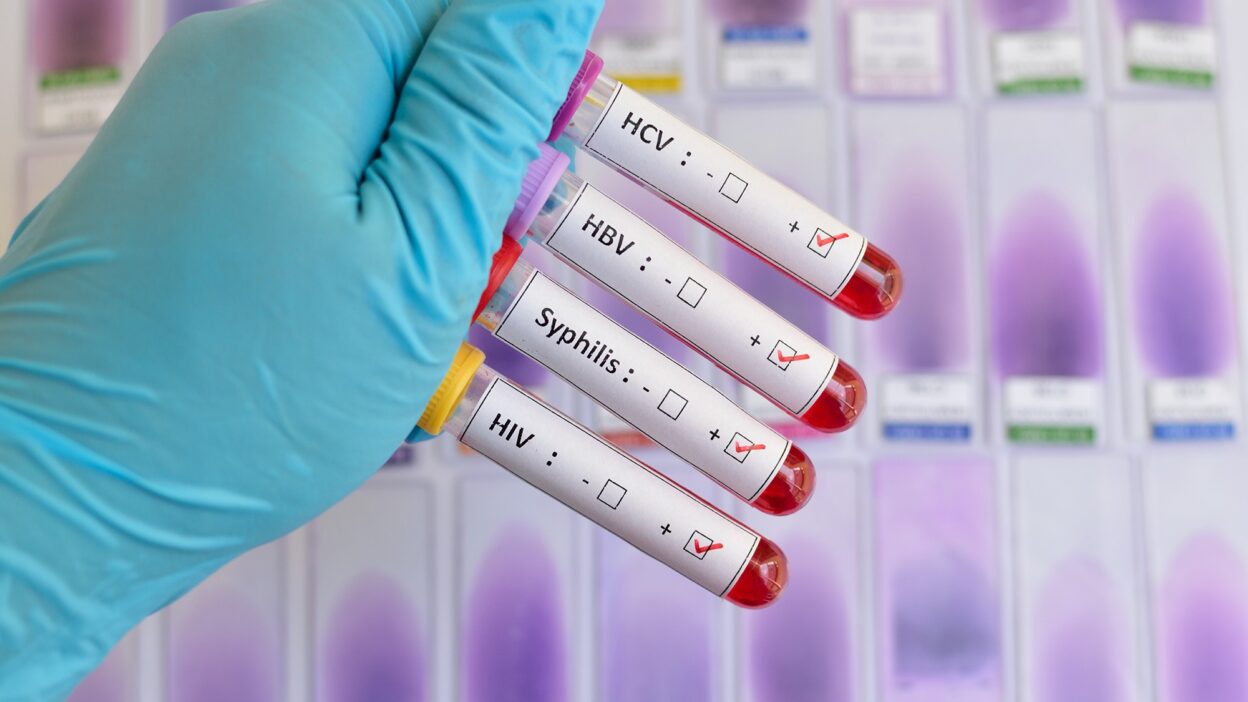
When people hear “STI,” HIV is often the first and sometimes only infection that comes to mind. This is understandable given the decades of public health campaigns around HIV in Nigeria. But this focus has a downside: it leaves many people uninformed about other sexually transmitted infections that are just as common, just as silent, and in some cases just as dangerous.
This article breaks down the key differences between HIV and other common STIs, how they compare in terms of how they spread, symptoms, testing, treatment, and long-term impact. Understanding these differences helps you make smarter decisions about your sexual health, not just your HIV risk.
First: What HIV and Other STIs Have in Common
Before the differences, the similarities matter:
- Most cause no symptoms: HIV, chlamydia, gonorrhoea, syphilis (early), hepatitis B, and HPV can all be present for months or years without any noticeable signs
- All are spread primarily through sexual contact, though the specific routes differ
- All are detectable through testing: the only reliable way to know your status for any STI is to get tested
- All are manageable or treatable: some are curable with antibiotics; others are lifelong but controllable with medication
- All increase risk of the others: having one STI, especially one that causes sores or inflammation, significantly increases the risk of contracting HIV and vice versa
The Key Differences: HIV vs Other STIs
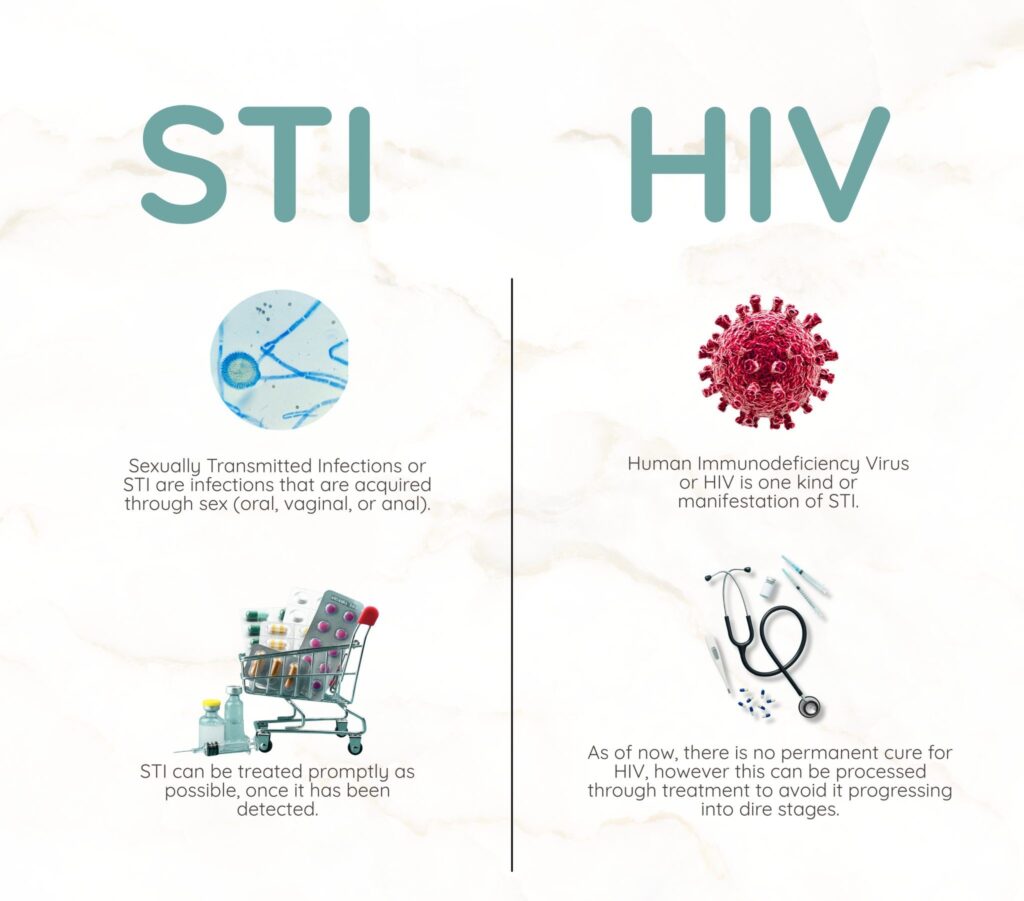
1) The Type of Pathogen
| Infection | Type |
| HIV | Virus (retrovirus) – cannot be cured, only managed |
| Herpes (HSV) | Virus – cannot be cured, only managed |
| HPV | Virus – most infections clear on their own |
| Hepatitis B | Virus – can become chronic; no cure, but treatable |
| Chlamydia | Bacteria – curable with antibiotics |
| Gonorrhoea | Bacteria – curable with antibiotics |
| Syphilis | Bacteria – curable with penicillin |
Key difference: Bacterial STIs (chlamydia, gonorrhoea, syphilis) are completely curable with the right antibiotic treatment. Viral STIs, including HIV, are lifelong infections managed with medication but not eliminated.
2) How They Attack the Body
HIV is unique among STIs in the specific way it causes harm. It does not directly damage a specific organ, but instead, it attacks the immune system itself, specifically CD4+ T-cells (a type of white blood cell that coordinates immune responses). Over time, without treatment, HIV destroys enough CD4 cells that the immune system can no longer defend the body against infections and cancers it would normally fight off. This advanced stage is called AIDS (Acquired Immunodeficiency Syndrome).
Other STIs cause harm differently:
- Chlamydia and gonorrhoea cause local inflammation in the reproductive tract, leading to scarring and infertility if untreated
- Syphilis progresses through stages, eventually damaging the heart, brain, and nervous system in its tertiary stage
- Herpes causes recurring painful outbreaks and stays dormant in nerve cells for life
- HPV can cause abnormal cell changes in the cervix, anus, throat, or genitals that may progress to cancer
- Hepatitis B attacks the liver, causing inflammation that can lead to cirrhosis and liver cancer
No other STI systematically dismantles the immune system the way HIV does, which is what makes untreated HIV uniquely dangerous.
3) How They Are Transmitted
All STIs spread through sexual contact, but the specifics differ significantly:
| Infection | Main Transmission Routes |
| HIV | Unprotected sex (anal highest risk, vaginal significant), blood (shared needles, transfusions), mother-to-child (pregnancy, birth, breastfeeding) |
| Chlamydia | Vaginal and anal sex; oral sex (less common) |
| Gonorrhoea | Vaginal, anal, and oral sex |
| Syphilis | Direct contact with a syphilitic sore through sex or kissing if sores are present on the lips/mouth |
| Herpes | Skin-to-skin genital or oral contact, even without visible sores (asymptomatic shedding) |
| HPV | Skin-to-skin genital contact, even without penetration |
| Hepatitis B | Unprotected sex, blood contact, mother-to-child, and also through sharing razors or toothbrushes with an infected person |
Key difference: HIV requires a direct route into the bloodstream or mucous membranes; it does not survive long outside the body and cannot be transmitted through casual contact. Herpes and HPV, by contrast, can spread through skin contact alone, making them harder to prevent with condoms alone.
4) Window Periods and Testing Timelines
The window period is the time between exposure to an infection and when a test can reliably detect it. Testing too early can yield a false negative.
| Infection | Window Period | Test Used |
| HIV | 18-45 days (antigen/antibody test); up to 90 days (antibody-only test) | HIV rapid test, ELISA, or RNA test |
| Chlamydia | 1-2 weeks | Urine test or swab (NAAT) |
| Gonorrhoea | 1-2 weeks | Urine test or swab (NAAT) |
| Syphilis | 3-6 weeks | Blood test (RPR or TPHA) |
| Herpes | 12-16 days (swab of active sore); up to 12 weeks (blood antibody test) | Swab of sore or blood test |
| HPV | No standard screening test for HPV itself; detected through cervical screening (Pap smear/HPV DNA test) | Pap smear or HPV DNA test |
| Hepatitis B | 6 weeks to 6 months | Blood test (HBsAg) |
Key difference: HIV testing has a specific window period that is important to understand; testing too soon after a potential exposure may not detect infection. If you have had a recent possible exposure, speak with a clinician about the right test and the right timing.
5) Treatment and Outlook
HIV: There is no cure. However, antiretroviral therapy (ART) is highly effective; people who start treatment early and take it consistently can suppress the virus to undetectable levels. An undetectable viral load means HIV cannot be transmitted sexually (U=U: Undetectable = Untransmittable). With ART, people with HIV now have near-normal life expectancies. Treatment is lifelong.
Bacterial STIs (chlamydia, gonorrhoea, syphilis): All are curable with the correct antibiotic treatment. The challenge in Nigeria is antibiotic resistance, particularly with gonorrhoea, driven by widespread self-medication. Treatment must be prescribed based on a confirmed diagnosis, not guesswork.
Herpes: No cure. Antiviral medications (acyclovir, valacyclovir) reduce outbreak frequency and severity and lower the risk of transmission. Many people with herpes live comfortably with minimal outbreaks, especially over time.
HPV: No cure for the virus itself, but most infections clear naturally within 1-2 years. The conditions HPV causes (warts, precancerous cells) are treatable. Vaccination prevents the most dangerous strains.
Hepatitis B: No cure for chronic hepatitis B, but antiviral medications manage the virus and protect the liver. Vaccination prevents infection entirely, making it the most powerful tool against hepatitis B.
6) Prevention Tools Available
| Prevention | HIV | Bacterial STIs | Herpes | HPV | Hepatitis B |
| Condoms | ✅ Highly effective | ✅ Highly effective | ⚠️ Reduces but doesn’t eliminate | ⚠️ Reduces but doesn’t eliminate | ✅ Effective |
| Vaccine | ✅ No vaccine but PrEP prevents HIV | ❌ No vaccine | ❌ No vaccine | ✅ HPV vaccine available | ✅ Hepatitis B vaccine available |
| PrEP | ✅ Pre-Exposure Prophylaxis – a daily pill that prevents HIV in high-risk individuals | ❌ Not applicable | ❌ Not applicable | ❌ Not applicable | ❌ Not applicable |
| PEP | ✅ Post-Exposure Prophylaxis – emergency treatment taken within 72 hours of HIV exposure | ❌ Not applicable | ❌ Not applicable | ❌ Not applicable | ✅ Hepatitis B immunoglobulin available post-exposure |
| Regular screening | ✅ Essentia | ✅ Essentia | ✅ Usefu | ✅ Cervical screening is essential | ✅ Essential |
Key difference unique to HIV: PrEP (Pre-Exposure Prophylaxis) is a daily medication that prevents HIV infection in people at high risk. It is one of the most powerful HIV prevention tools available and is increasingly accessible in Nigeria. If you are at ongoing high risk of HIV, speak to a clinician about PrEP.
7) Stigma and Its Impact on Care
HIV carries the heaviest stigma of all STIs in Nigeria, rooted in decades of association with death, immorality, and social exclusion. This stigma causes real harm: it delays testing, discourages treatment, and drives HIV underground where it continues to spread silently.
Other STIs carry stigma too, but often to a lesser degree, though this varies significantly. Syphilis, gonorrhoea, and chlamydia are frequently undertested in Nigeria because people avoid clinics out of shame or fear of judgment.
The medical reality is this: an STI is an infection, not a character judgment. Chlamydia does not make someone a bad person. HIV does not define a person’s worth. Every person deserves dignified, confidential care, and that is what good healthcare providers offer.
At Pretty Healthcare, all STI testing and treatment are conducted with complete confidentiality and without judgment.
When Should You Test for Both HIV and Other STIs?
Because STIs frequently co-occur and many share the same risk factors, comprehensive STI screening, not just HIV testing, is the most responsible approach.
Test for:
- HIV: at least once a year if sexually active; every 3–6 months if at higher risk
- Syphilis, chlamydia, gonorrhoea: annually if sexually active; more frequently with multiple partners
- Hepatitis B: know your status; get vaccinated if negative
- Hepatitis C: especially if there has been any blood-to-blood contact
- HPV / Cervical screening: for women, as part of routine gynaecological care
A comprehensive STI screening at Pretty Healthcare can detect multiple infections in a single visit. Know your full status, not just one part of it.
Quick Comparison Summary
| HIV | Bacterial STIs | Herpes | HPV | Hepatitis B | |
| Curable? | No | Yes | No | No (clears naturally) | No (preventable by vaccine) |
| Symptoms? | Usually none for years | Usually none | Outbreaks | Usually none | Usually none |
| Damages what? | Immune system | Reproductive tract | Nerves/skin | Cervix/other tissues | Liver |
| Vaccine? | No (PrEP available) | No | No | Yes | Yes |
| Test type | Blood test | Urine/swab | Swab/blood | Pap smear/DNA test | Blood test |
Bottom Line
HIV is serious, but it is not the only STI that deserves your attention. Chlamydia silently destroys fertility. Syphilis can damage the brain and heart. Hepatitis B destroys the liver. HPV causes cancer. All of these are common in Nigeria, largely silent, and detectable through testing. The smart approach is not to test only for HIV; it is to test comprehensively, know your full status, and make informed decisions about your health and your partner’s health.
Book a comprehensive STI screening at Pretty Healthcare, Ikeja, Lagos. prettyhealthcare.com.ng/diagnostics or chat with our health advisor on WhatsApp. Monday – Friday: 8am – 5pm | Saturday: 9am – 4pm.