“I have an ulcer” is one of the most common self-diagnoses in Nigeria. Stomach pain, burning sensations, bloating, and discomfort after eating are so common that many Nigerians assume they have a peptic ulcer and self-medicate with antacids, milk, or herbs; sometimes for years. But stomach pain has many causes, and two of the most frequently confused are gastritis and peptic ulcer disease. They feel similar, they share some causes, but they are different conditions that require different management.
Understanding the difference matters, not just for getting the right treatment, but because untreated ulcers can lead to serious, life-threatening complications.
What Is Gastritis?
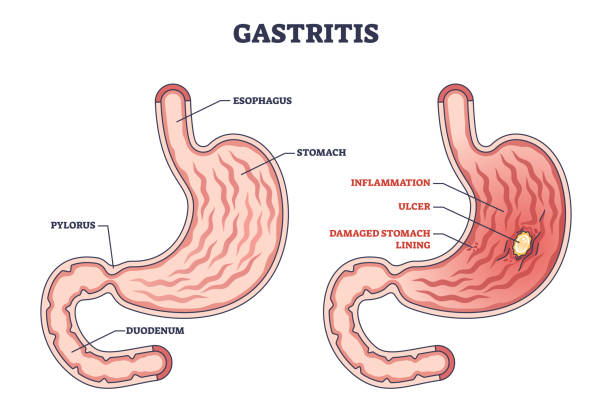
Gastritis is inflammation of the stomach lining. The stomach is lined with a thick layer of mucus that protects it from the acid it produces to digest food. When this protective lining becomes irritated or inflamed for any number of reasons, the result is gastritis.
Gastritis can be:
- Acute – comes on suddenly, often triggered by a specific cause like an infection, alcohol binge, or medication. Usually resolves with treatment.
- Chronic – develops gradually over time and may persist for months or years if the underlying cause is not addressed.
Gastritis is extremely common. Many people have it without significant symptoms. In others, it causes persistent discomfort that significantly affects quality of life.
What Is a Peptic Ulcer?
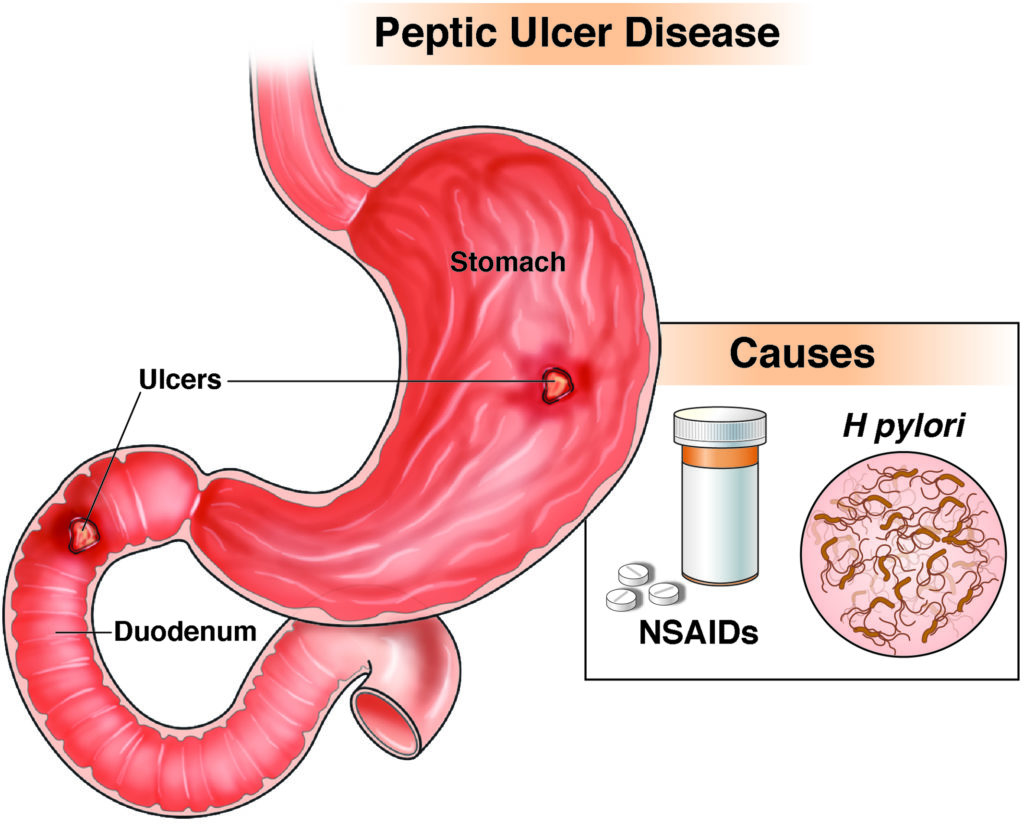
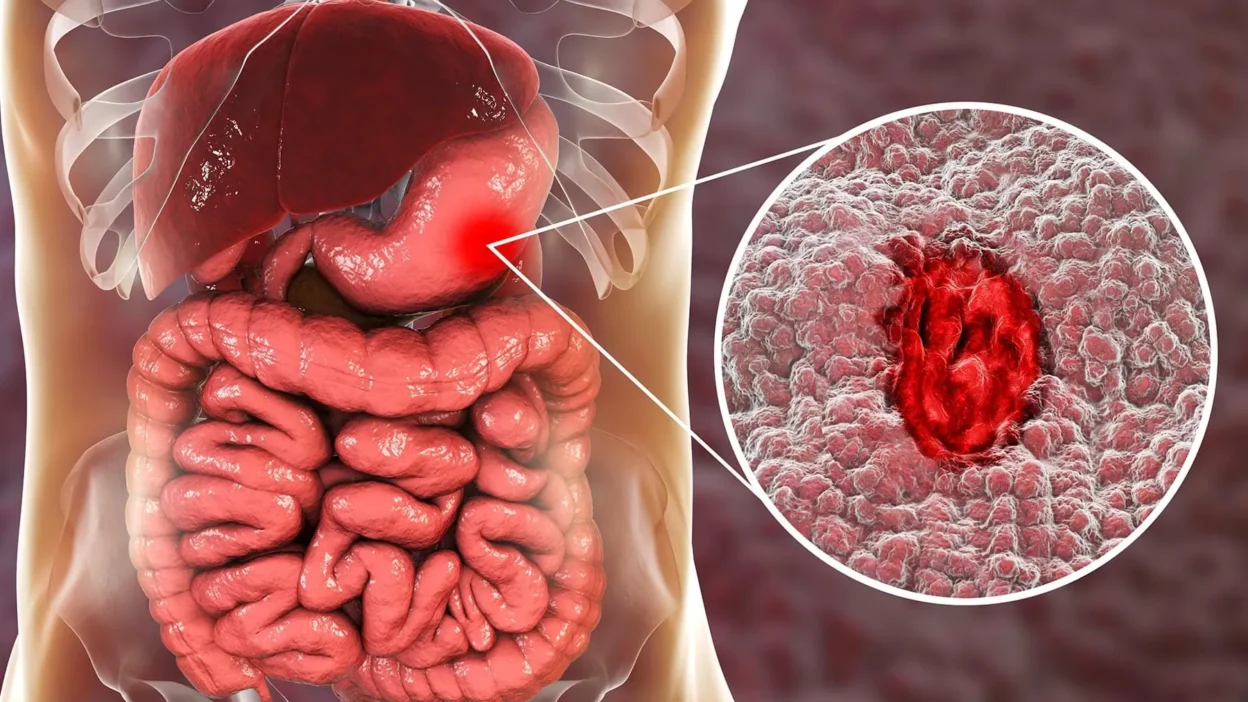
A peptic ulcer is a sore (open wound) that develops in the lining of the stomach, small intestine, or oesophagus when the protective mucus layer breaks down, and stomach acid erodes the tissue beneath.
There are two main types:
- Gastric ulcer: a sore in the stomach lining itself
- Duodenal ulcer: a sore in the first section of the small intestine (duodenum), just below the stomach. This is actually the more common type.
The key distinction from gastritis: gastritis is inflammation; an ulcer is an actual wound in the tissue. Think of gastritis as a sunburn on the stomach lining, painful and irritated but still intact. An ulcer is more like a cut or open sore; the lining has broken down entirely in that spot.
What Causes Each Condition?
Both gastritis and peptic ulcers share several causes, which is part of why they are so easily confused:
Helicobacter pylori (H. pylori) Infection
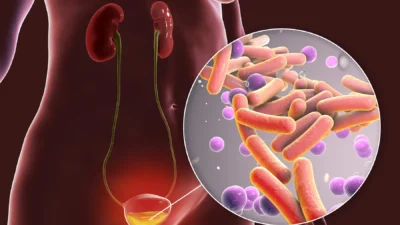
The most important cause of both conditions in Nigeria is H. pylori, a bacterium that lives in the stomach lining and is extremely common in Nigeria, estimated to infect more than 70% of adults in some studies. It damages the protective mucus layer, leading to inflammation (gastritis) and, in some people, progressing to ulcer formation.
H. pylori spreads through contaminated food and water, making it highly prevalent in environments with inconsistent food hygiene and water sanitation. Many Nigerians are infected without knowing it.
NSAIDs (Non-Steroidal Anti-Inflammatory Drugs)
Medications like ibuprofen, aspirin, diclofenac, and naproxen, widely used and frequently self-medicated in Nigeria for pain and fever, irritate and erode the stomach lining. Regular use without food or a protective medication significantly increases the risk of both gastritis and ulcers.
Excessive Alcohol Consumption
Alcohol directly irritates and erodes the stomach lining, causing acute gastritis and contributing to ulcer formation with chronic use.
Stress
Severe physical stress, such as major surgery, serious illness, burns, or trauma, can trigger stress ulcers. Emotional and psychological stress alone does not cause ulcers directly, but it can worsen symptoms and delay healing.
Smoking
Smoking impairs the stomach’s ability to heal and reduces the effectiveness of ulcer treatment. It is a significant risk factor for both conditions.
Spicy Food and Certain Diets
Spicy food does not cause ulcers or gastritis; this is a common myth. However, it can aggravate existing symptoms in people who already have either condition.
Symptoms: How They Compare
This is where the confusion is greatest; both conditions cause stomach discomfort and can feel very similar. Here is a detailed comparison:
| Symptom | Gastritis | Peptic Ulcer |
| Stomach pain/burning | Upper abdomen burning or gnawing feeling | The upper abdomen is often more intense and localised |
| When pain occurs | During or after eating, sometimes on an empty stomach | Duodenal ulcer: classically 2-3 hours after eating, at night, or on an empty stomach; relieved by eating. Gastric ulcer: often worsened by eating |
| Nausea | Common | Common |
| Vomiting | Occasional | Occasional; may include blood in severe cases |
| Bloating/fullness | Very common | Common |
| Loss of appetite | Common | Common |
| Heartburn | Common | Common |
| Blood in stool | Rare (if severe erosive gastritis) | Can occur black, tarry stools indicate a bleeding ulcer |
| Vomiting blood | Rare | A medical emergency can occur |
| Weight loss | Less common | May occur in a gastric ulcer |
The Most Useful Distinguishing Feature
The timing of pain in relation to meals is the most clinically useful clue:
- Pain that comes on 2-3 hours after eating, wakes you at night, and is relieved by eating or antacids → strongly suggests a duodenal ulcer
- Pain that comes on during or shortly after eating → more consistent with gastric ulcer or gastritis
- Diffuse upper abdominal discomfort with nausea and bloating, worse with eating → more consistent with gastritis
However, and this is critical, symptoms alone cannot reliably distinguish between these conditions. Many people with ulcers have atypical or no symptoms. Some people with severe gastritis feel minimal pain. The only way to know for certain is through proper investigation.
Warning Signs That Require Immediate Medical Attention
Some symptoms indicate serious complications; do not manage these at home:
- Vomiting blood (bright red or dark, coffee-ground appearance) indicates active bleeding in the stomach or oesophagus
- Black, tarry stools (called melaena) indicate bleeding in the upper digestive tract
- Sudden, severe stabbing abdominal pain may indicate a perforated ulcer (a hole through the stomach wall), a surgical emergency
- Feeling faint, dizzy, or collapsing alongside stomach pain may indicate significant internal bleeding
- Unintentional rapid weight loss combined with stomach pain requires urgent investigation to rule out stomach cancer
These are emergencies. Go to a hospital immediately, do not wait, do not self-medicate.
How Are They Diagnosed?
Endoscopy (Gold Standard)
A thin, flexible tube with a camera (endoscope) is passed through the mouth into the stomach and small intestine. This allows the doctor to directly visualise inflammation, erosions, or ulcers and take biopsies if needed. It is the most accurate diagnostic method and can also test for H. pylori infection at the same time.
H. pylori Testing
Since H. pylori is the most common cause of both conditions, testing for it is essential:
- Urea breath test: non-invasive; patient swallows a solution and breathes into a collection bag
- Stool antigen test: a stool sample is tested for H. pylori proteins
- Blood antibody test: detects antibodies to H. pylori (less accurate for active infection)
- Biopsy during endoscopy: the most accurate method
Barium Meal X-Ray
A patient drinks a barium solution that coats the digestive tract, making it visible on X-ray. Less commonly used now that endoscopy is more widely available, but still used in some Nigerian hospitals.
Blood Tests
Can detect anaemia from chronic bleeding and check inflammatory markers, though they cannot directly diagnose gastritis or ulcers.
At Pretty Healthcare, diagnostic services for digestive health are available. Speak with our clinical team about the right investigation for your symptoms.
Treatment
For H. pylori-Related Gastritis and Ulcers
H. pylori eradication therapy is a combination of two antibiotics plus a proton pump inhibitor (PPI) taken for 7-14 days. This is called triple therapy and cures the underlying infection, allowing the stomach lining to heal. It is essential to complete the full course; partial treatment leads to antibiotic resistance and treatment failure.
Proton Pump Inhibitors (PPIs)
Medications like omeprazole, lansoprazole, and pantoprazole reduce acid production, allowing the stomach lining to heal. They are used for both gastritis and ulcers, with or without H pylori infection.
Antacids and H2 Blockers
Provide symptom relief by neutralising or reducing acid. Useful for managing pain, but do not treat the underlying cause.
Avoiding Triggers
- Stop or reduce NSAIDs – switch to paracetamol for pain where possible, or use NSAIDs with a PPI if they are medically necessary.
- Reduce or eliminate alcohol.
- Quit smoking
- Eat smaller, more frequent meals
- Avoid skipping meals for long periods
Dietary Adjustments (Nigeria-Specific)
- Eat regularly, do not go long hours without food, especially if you have a duodenal ulcer (food relieves pain)
- Reduce very spicy foods during active symptoms, not because spice causes ulcers, but because it aggravates inflammation.
- Limit very acidic drinks like carbonated soft drinks and undiluted fruit juices during flare-ups.s
- Pap (ogi), boiled yams, plain rice, and cooked vegetables are generally well-tolerated during an ulcer or gastritis flare.s
- Avoid taking medications like ibuprofen on an empty stomach; always eat first.
S.urgery
Rarely needed today thanks to effective medical treatment. Surgery may be required for complications like perforation, severe bleeding that does not stop with medication, or obstruction.
Common Myths in Nigeria – Debunked
“Drinking cold water or eating ice causes an ulcer.” False. The temperature of food or drink does not cause or worsen ulcers. The primary causes are H. pylori infection and NSAID overuse.
“Ulcer is caused by not eating on time.” Partially true for duodenal ulcers, hunger worsens pain because an empty stomach allows acid to irritate the ulcer. But missing meals alone does not cause an ulcer. H. pylori or NSAIDs are the root cause.
“Milk cures ulcers.” False. Milk temporarily neutralises acid and relieves pain, but it stimulates more acid production shortly after, worsening the condition long-term. Do not use milk as an ulcer treatment.
“If I have stomach pain, I have an ulcer.” Not necessarily. Stomach pain has many causes, such as gastritis, acid reflux, irritable bowel syndrome, food intolerance, gallstones, and others. Self-diagnosing as “ulcer” and self-medicating delays proper diagnosis and treatment of what may be a different or more serious condition.
“Pepper soup and spicy food cause ulcers.” False. Spicy food does not cause ulcers. It can aggravate symptoms in someone who already has gastritis or an ulcer, but it is not the root cause.
When to See a Clinician
See a doctor if you have:
- Stomach pain or burning that has lasted more than 2 weeks
- Pain that regularly wakes you at night
- Nausea and loss of appetite that are affecting your daily life
- Any black or tarry stools, seek care urgently
- Any blood in vomit, go to a hospital immediately
- Unexplained weight loss alongside stomach symptoms
- Symptoms that have not improved after a week of antacids
Do not continue self-medicating with antacids for months without a proper diagnosis. H. pylori infection, the most common underlying cause, requires specific antibiotic treatment that antacids alone cannot provide.
Quick Comparison Summary
| Gastritis | Peptic Ulcer | |
| What is it? | Inflammation of the stomach lining | Open sore in the stomach or intestinal lining |
| Main causes | H. pylori, NSAIDs, alcohol | H. pylori, NSAIDs, smoking |
| Pain timing | During/after eating | After eating (gastric) or on an empty stomach (duodenal) |
| Bleeding risk | Low (unless erosive) | Higher |
| Diagnosis | Endoscopy, H. pylori test | Endoscopy, H. pylori test |
| Treatment | PPIs, H. pylori eradication, lifestyle | PPIs, H. pylori eradication, lifestyle |
| Curable? | Yes, with treatment | Yes, with treatment |
Bottom Line
Gastritis and peptic ulcers are two different conditions that are frequently confused and frequently self-treated incorrectly in Nigeria. Both are common, both are manageable, and both are very treatable when properly diagnosed. The key is to stop guessing and get tested. If you have been living with recurring stomach pain, burning, or discomfort for weeks, months, or years, you deserve a proper diagnosis and a treatment plan that actually works, not just temporary relief from antacids.
Book a digestive health consultation at Pretty Healthcare, Ikeja, Lagos – prettyhealthcare.com.ng/diagnostics or chat with our health advisor on WhatsApp. Monday – Friday: 8 am – 5 pm | Saturday: 9 am – 4 pm.